


Recipe of the Day
Discover a New Recipe Every Day. Give Back With Every Bite.
Every day, we feature a hand-picked recipe for you to discover, cook, and share. The best part?
Every recipe you read helps feed the hungry.


When one thinks of tomato sauce, the image of a well-used ceramic pot brimming with Italian aromatics and a bubbling cauldron of ruby red tomato sauce comes to mind. Yet Italy doesn’t have full reign on tomato sauce — enter Egyptian Tomato Sauce, a bright spicy counterpart to your classic Sunday gravy.

Conjure up thoughts about Egypt, and tomatoes are not what come to mind, and for good reason. For the majority of history, tomatoes were sequestered off in the Americas. They didn’t show up in the European region until the 16th century with the Columbian Exchange. These new ingredients then spread beyond Europe in the 17th and 18th centuries. With Egypt being under Ottoman rule, Egyptian cuisine was influenced by cooking techniques coming out of the Ottoman Empire — a main component of that, by the 17th century, was tomato sauce-based recipes. Tomatoes have, since then, ingrained themselves into Egyptian cuisine, especially after water dams increased the growing season of certain produce. Nowadays, tomatoes have become connected with countless Egyptian home cooking methods called tasbika, which is a method of cooking in a tomato or tomato-sauce base. The sauce-base is so ubiquitous in Egypt, that no one bats an eye at the tomato’s not-so-Egyptian origins.
Here, Egyptian Tomato Sauce is a great companion to mujadara (lentils and rice) or koshari, as it brightens up the heavy starchy carbs with acidity and spice.
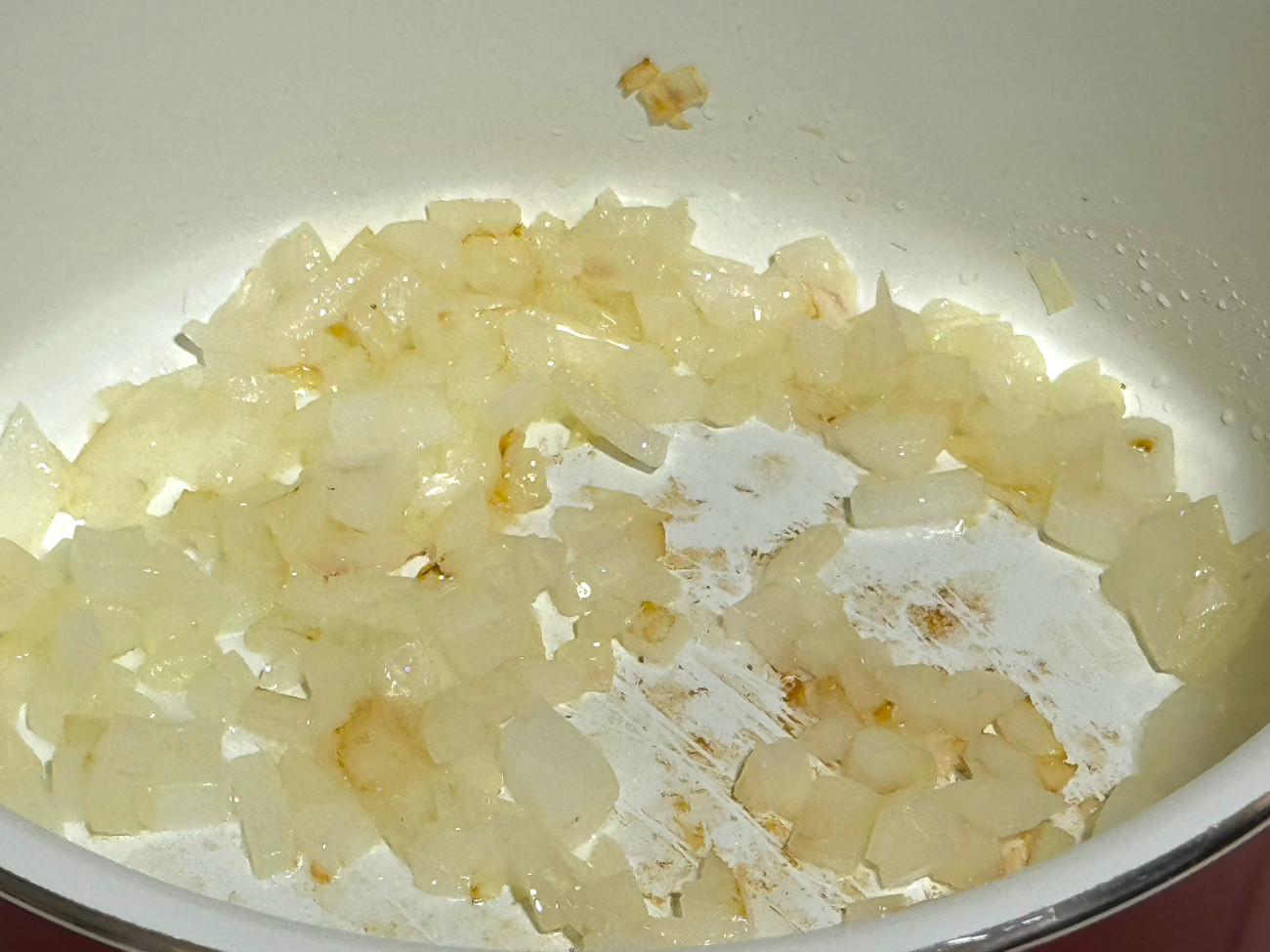
This version is a quick-cook one, meaning you can have this recipe done in an instant. After sautéing the onions until softened, cook the garlic until nice and fragrant. Add in the coriander and red chili flakes, stirring to incorporate the spices, and also bloom the spices to make them more fragrant.
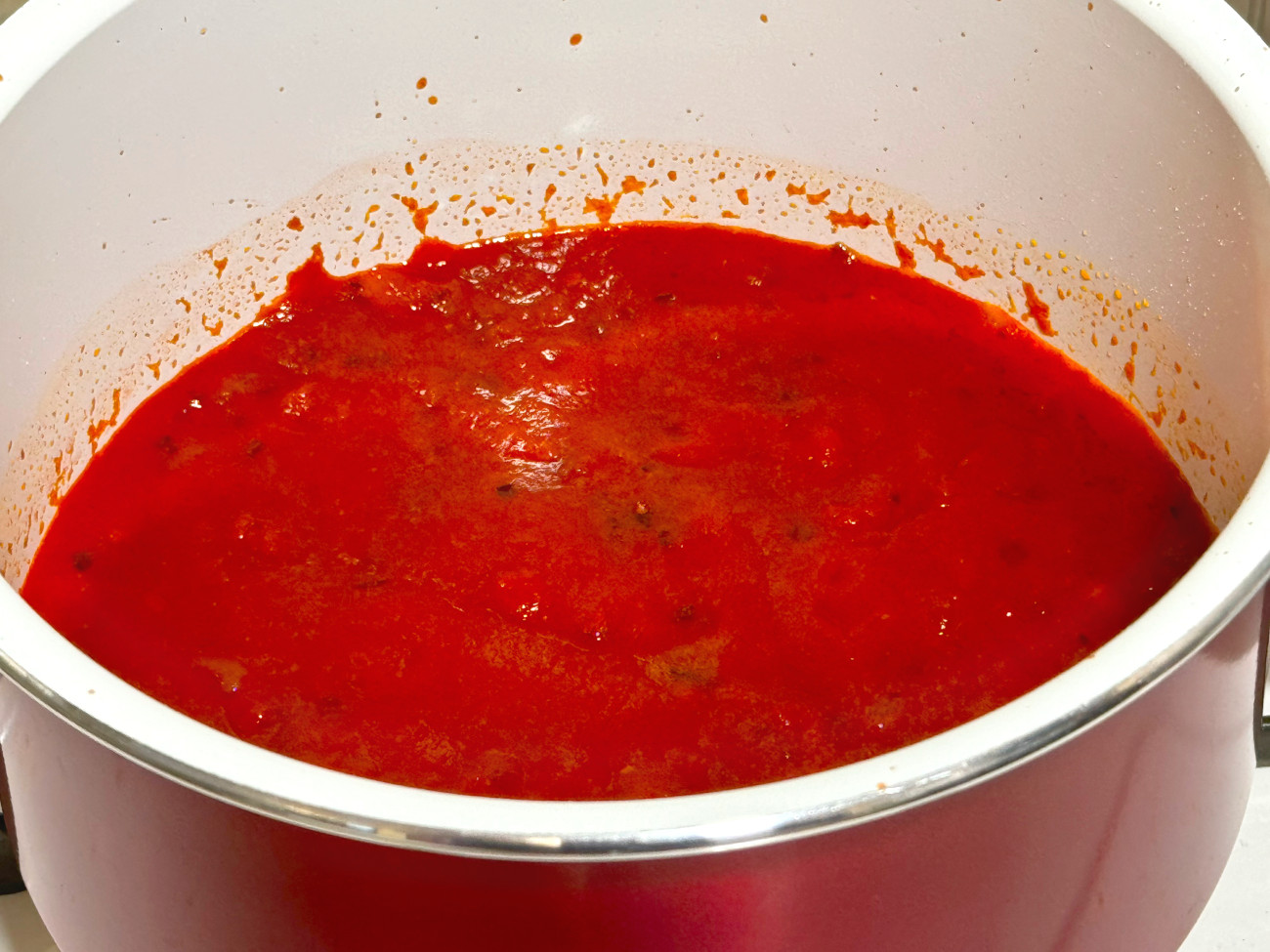
Pour in the tomato sauce or purée, stirring to prevent the onions and garlic from sticking to the bottom of the pot.
Bring to a boil and reduce to a simmer, cooking only for fifteen minutes, this marries the spices with the tomato sauce, softens the onions further, and brings out the sweetness of the garlic. Once it’s done simmering, stir in a splash of vinegar to counter the potential heaviness, serve, and enjoy.
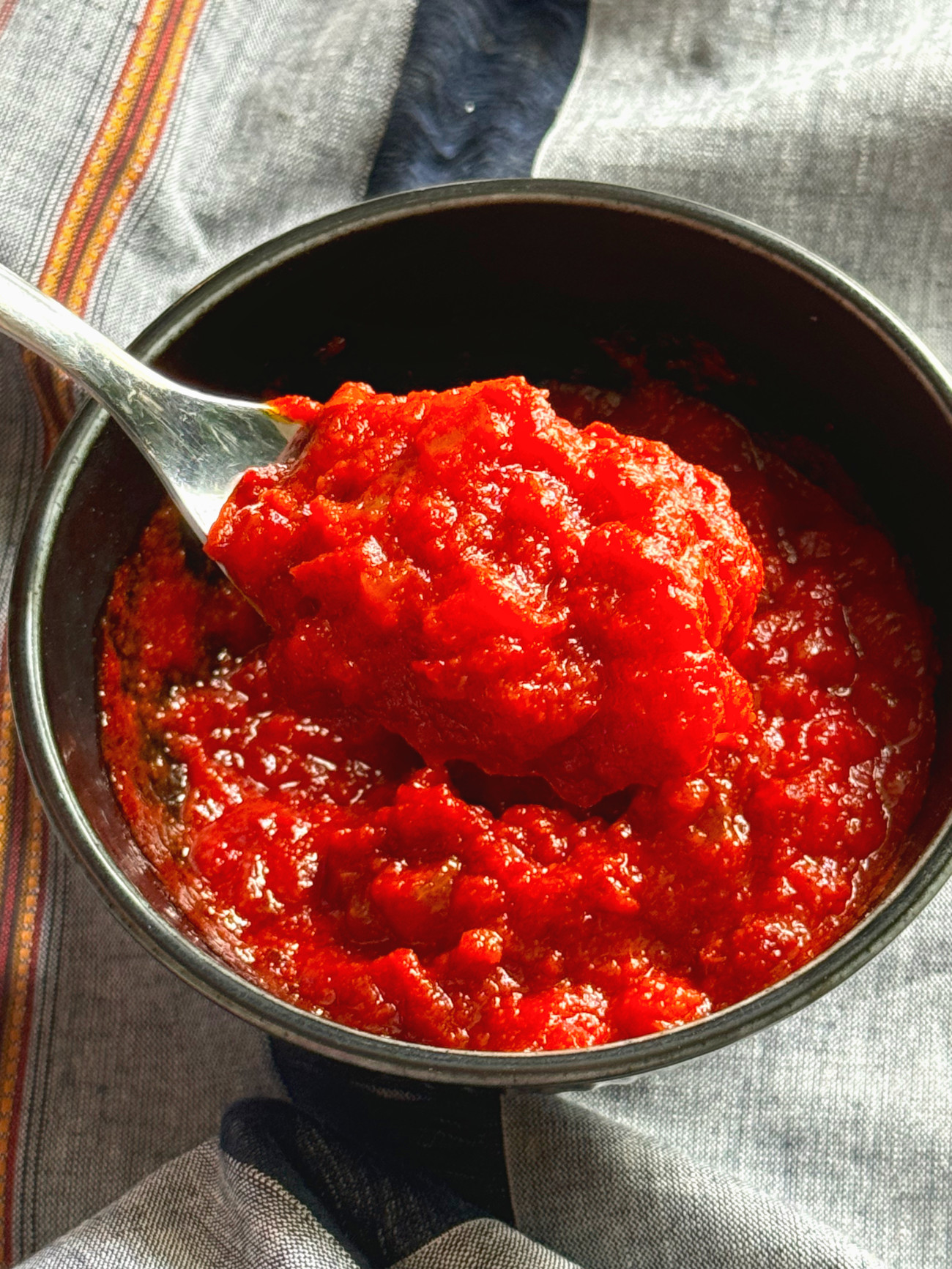
The chili flakes make the sauce spicy, while the coriander has a complex level of earthiness. Onion and ample garlic give the body of the sauce a great aromatic quality, making it a great companion to rice and beans, which soak up the sauce.

Egyptian Tomato Sauce can go outside the realm of Egyptian food and would be a great companion to chilled shrimp (think cocktail sauce taken to another level) or would be great next to a platter of garlicky Parmesan chicken wings or cutlets. It’s unique but versatile at the same time, it’s far from your average sauce but has all of the right ingredients to still be defined as a comfort food.
Egyptian Tomato Sauce
Diet: Vegetarian
Ingredients
- 1 tablespoon olive oil
- 1 small onion, finely chopped or grated
- 4 garlic cloves, minced
- 1 teaspoon ground coriander
- 1/2 to 1 teaspoon red chili flakes
- 1 28-ounce can tomato sauce or puree
- 1 to 2 tablespoons distilled white vinegar
- Kosher salt and freshly cracked black pepper, to taste
Preparation
- In a saucepan, heat olive oil and add in onions, cooking on a medium-low heat until translucent and softened, about 6 to 8 minutes.
- Add in garlic, stirring to combine, cook for 30 seconds or until fragrant.
- Add in coriander and chili flakes, stirring to combine.
- Carefully pour in tomato sauce, stir the sides and bottom of the pot to incorporate everything.
- Bring to a simmer and cook covered until the sauce thickens, about 15 minutes, stirring frequently.
- Add in the vinegar and season with salt and pepper to taste.
Recipe adapted from The Mediterranean Dish.