

Recipe of the Day
Discover a New Recipe Every Day. Give Back With Every Bite.
Every day, we feature a hand-picked recipe for you to discover, cook, and share. The best part?
Every recipe you read helps feed the hungry.

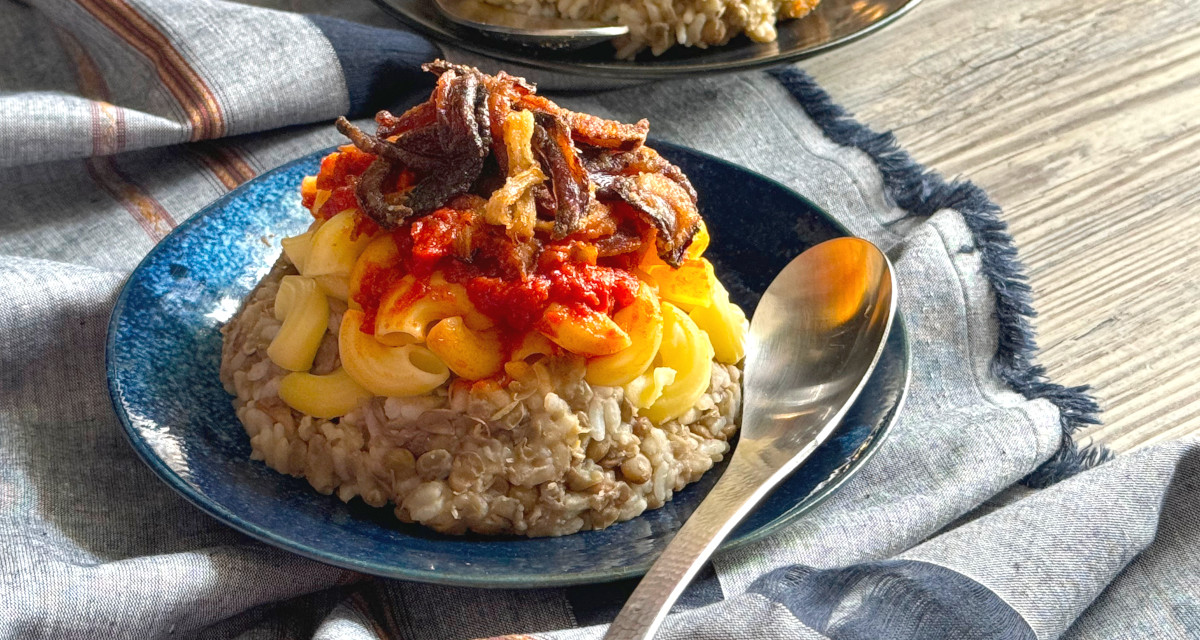
Lentils, chickpeas, macaroni, rice, tomato sauce, and fried onions — you might raise your eyebrows upon hearing that sort of combination, but this is assuredly a dish. In fact, this combination, called koshari, is considered to be a classic national dish of Egypt. One bite of this combination and you’ll understand just how good this combination is.
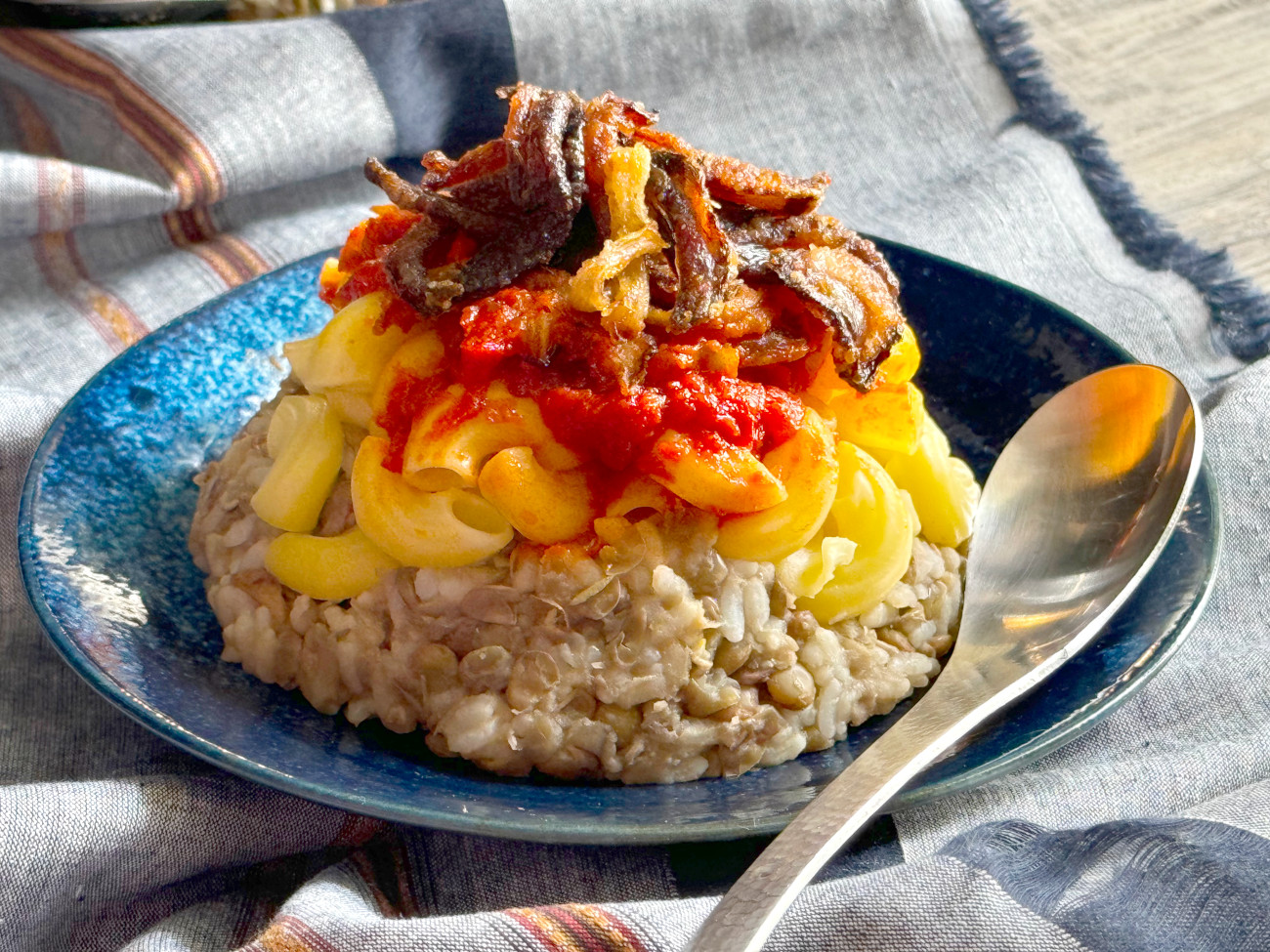
While koshari (also spelled koshary or kushary) is considered the national dish of Egypt, its origins supposedly harken back to India where it was more of a lentil-based one-pot stew called khichiri. It was then exported via the British who settled in Egypt after the First World War and was adapted and changed based on the local ingredients of the region. Nowadays it is an affordable street food that is piled up into an aluminum bowl where you can add and subtract any of the ingredients. The dish has been further popularized by the restaurant Koshary Abou Tarek, which named after its owner Abou Tarek. Considered the King of Koshari Abou Tarek’s rags-to-riches story of working as a teenage street vendor to support his family and into the owner of a vast chain of restaurants today shows the staying power and comfort of koshari.
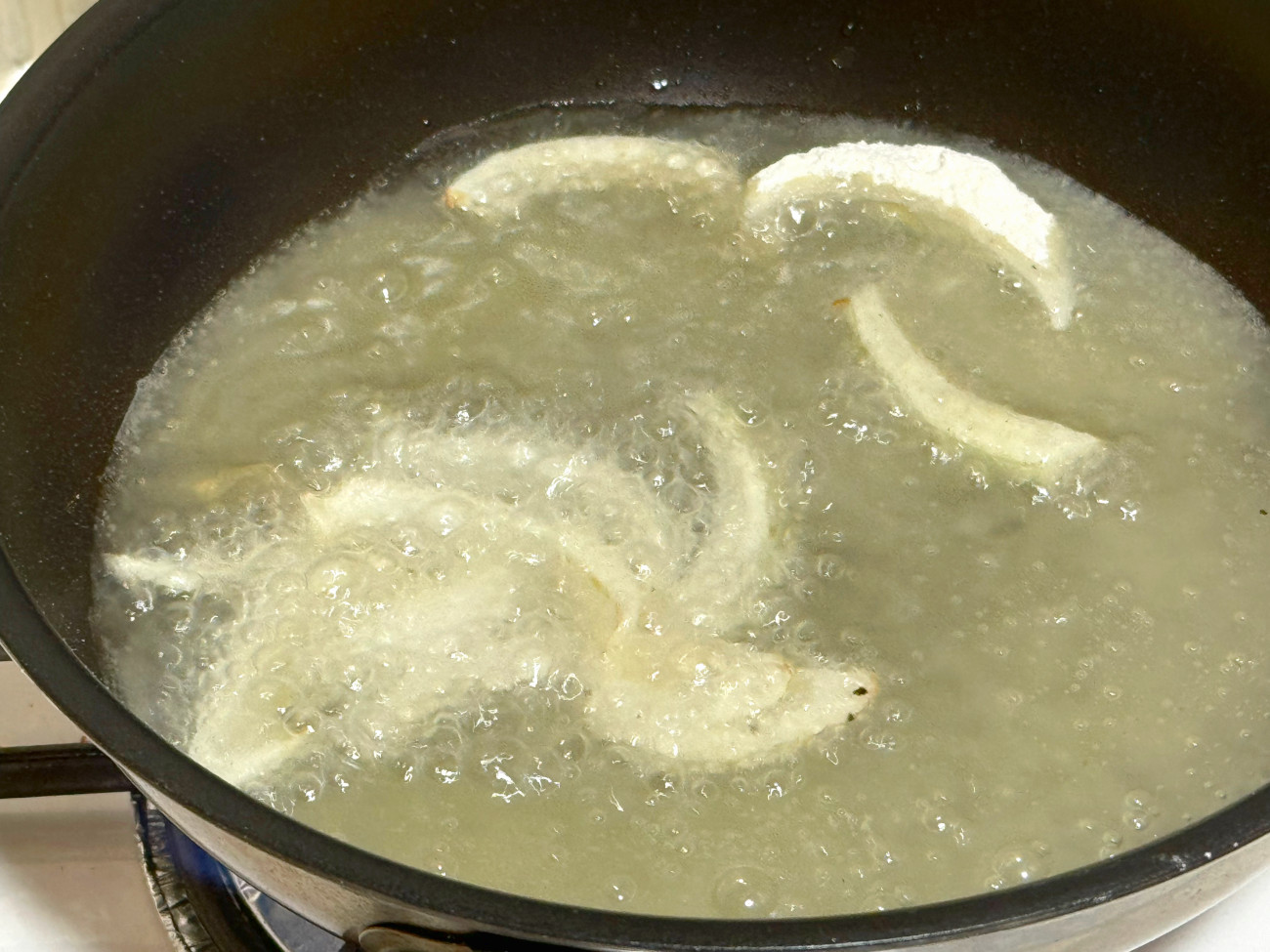
The hardest thing about Egyptian Koshari is prepping all of the ingredients. Onions are coated in flour and fried until crispy. Lentils, chickpeas, rice, and macaroni are all cooked before assembling. A spicy tomato sauce is made and prepared beforehand, only to be warmed up before serving.
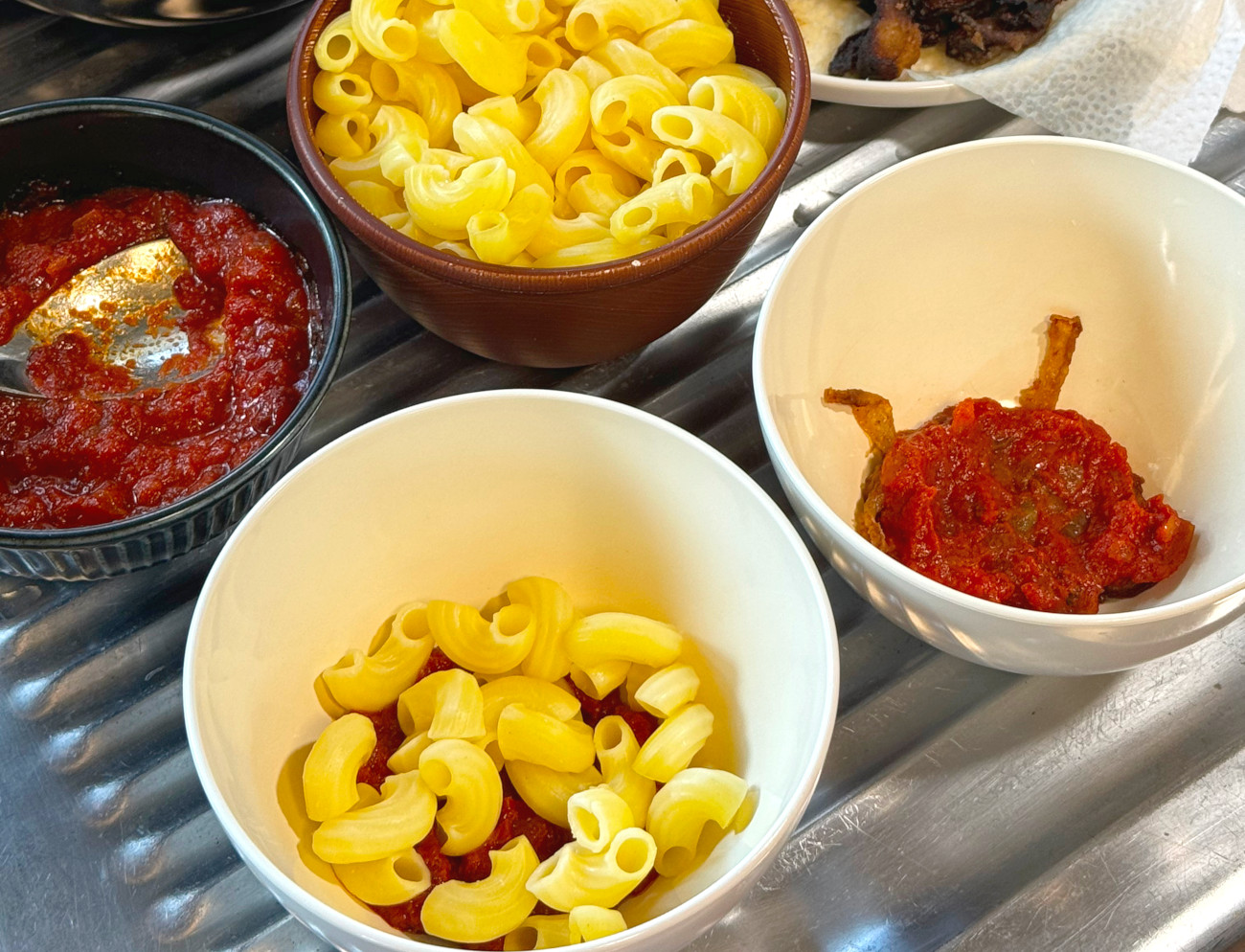
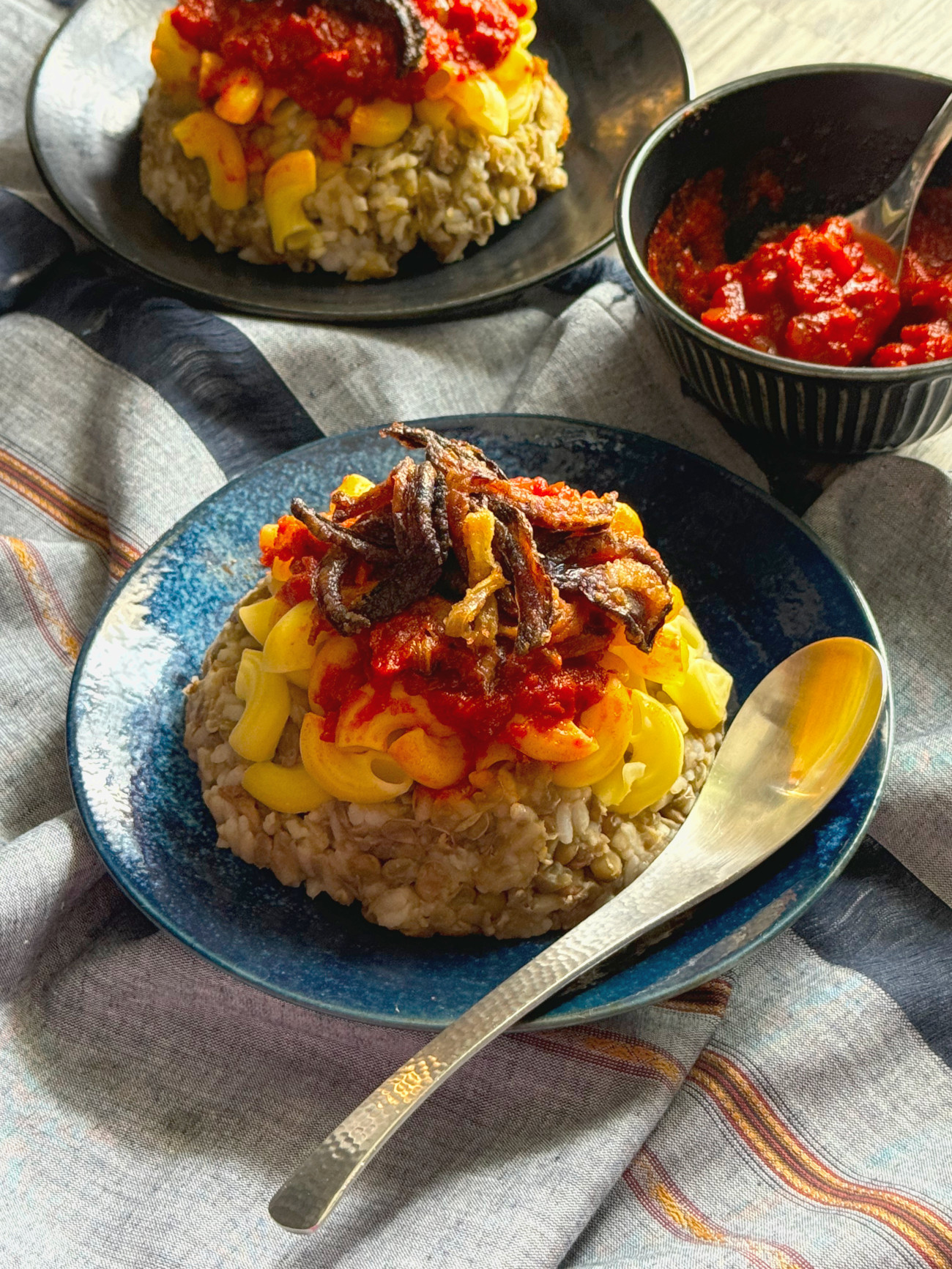
While many people pile the layers on top of each other, a pretty presentation is simple. Use a bowl (either one large for sharing or several small ones for individual servings) and layer the ingredients in inverse order. Add some (but not all) of the fried onions in the bottom, followed by the tomato sauce (the recipe for the tomato sauce can be found here). The macaroni gets spread into one even layer. At the same time, the chickpeas get spooned into the center (this will prevent them from falling all over the place and make for a nice surprise hidden in the center of the dish).
Next add the mixture of rice and lentils that have been mixed together with some coriander, salt, and pepper. Use the back of a spoon to press everything together. Invert the bowl onto a plate. Some of the sauce might stick to the inside of the bowl but you can spoon it on top.
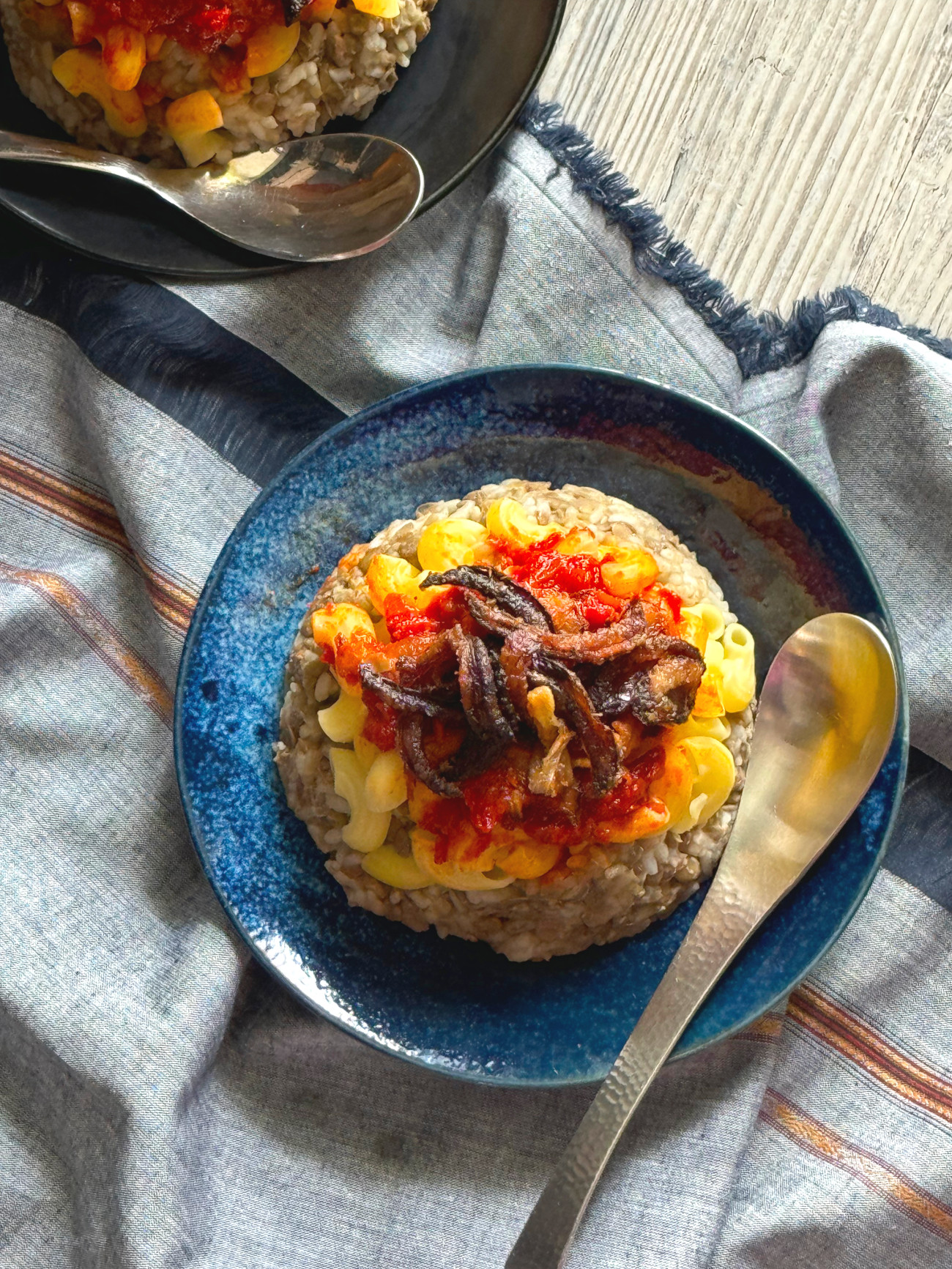
Garnish each serving of Egyptian Koshari with the remaining fried onions and enjoy!
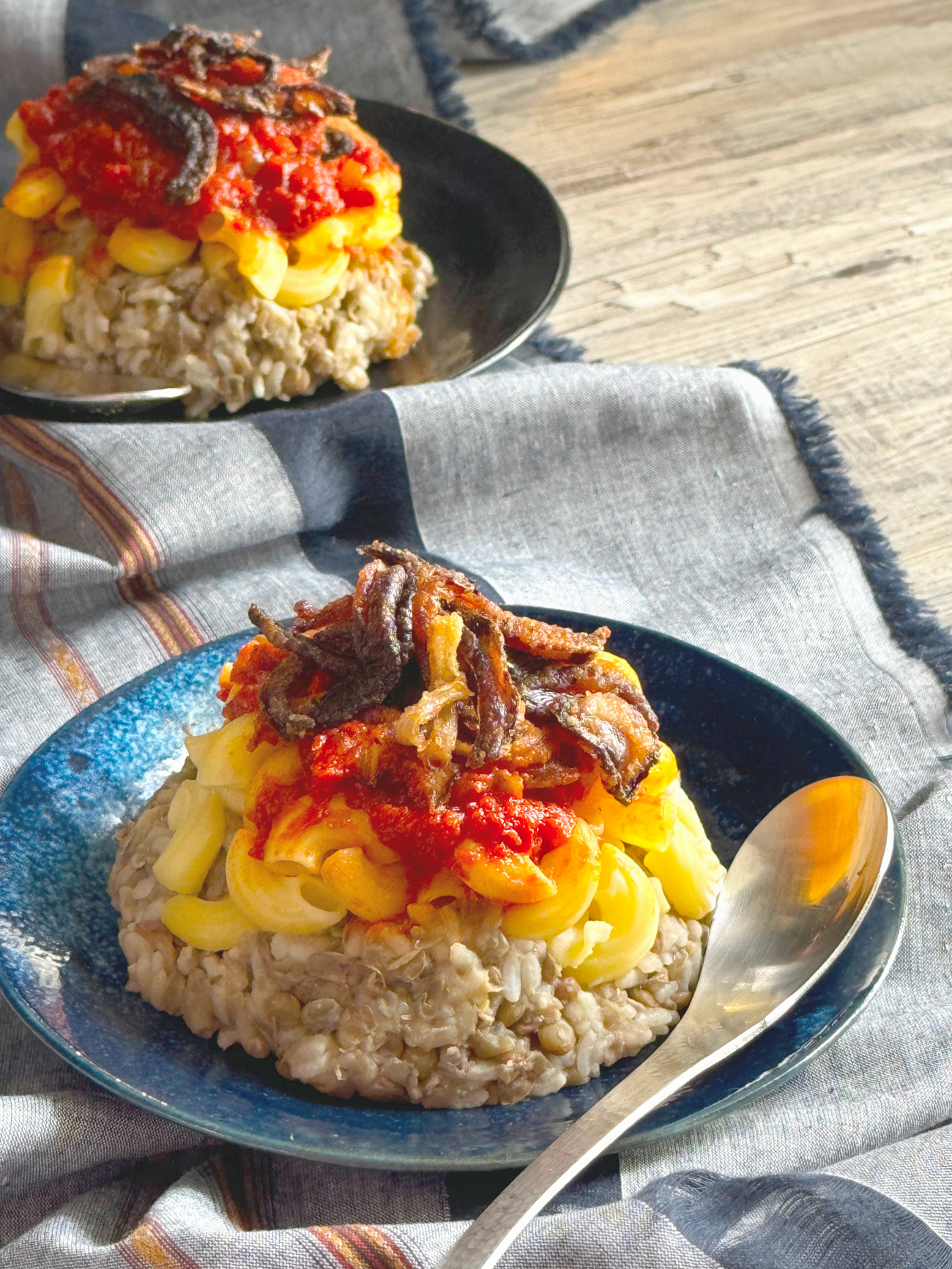
The textural contrast of the lentils and rice plays nicely against the crispy fried onions and the satisfying al dente bite of the pasta. Chickpeas nestled into the center of the dish add a well-needed neutral balance of flavor against the spicy heat of the tomato sauce.
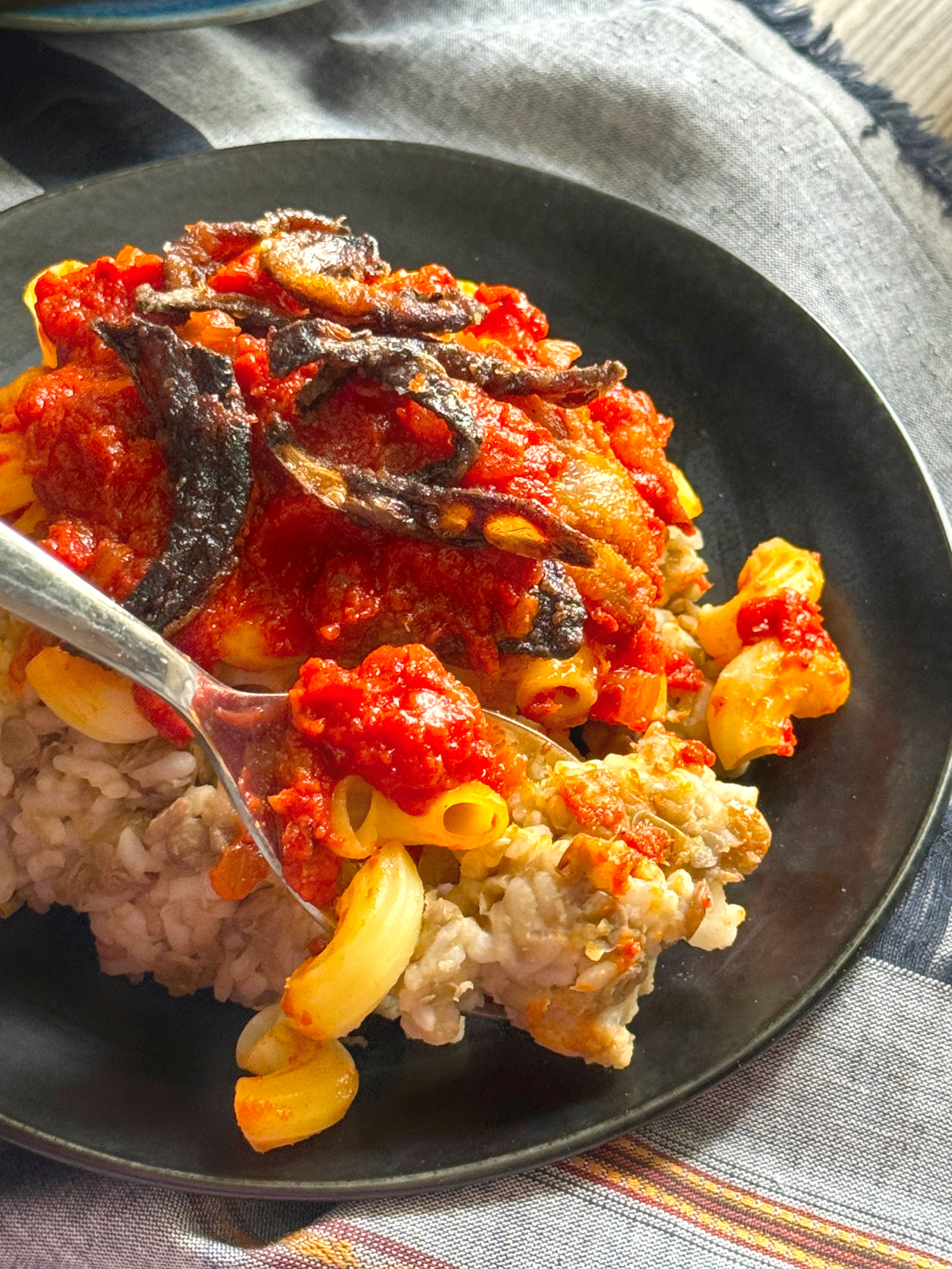
It’s a bowl of carb-laden comfort that knows no bounds. It is neutral, earthy, and spicy all in one bite.
Egyptian Koshari
Diet: Vegetarian
For the Crispy Onions:
- 1 large onion, sliced into thin strips
- 1 teaspoon fine salt
- 1/3 cup all-purpose flour
- 1/2 cup cooking oil
- Kosher salt and freshly cracked black pepper, to taste
For the Koshari:
- 1 tablespoon olive oil
- 1 1/2 cups brown lentils, drained and rinsed
- 1 1/2 cups white rice, cooked
- 1 teaspoon ground coriander
- 2 cups elbow macaroni, cooked according to package instructions
- 1 15-oz can chickpeas, drained, rinsed, and microwaved until warm
- Kosher salt and freshly cracked black pepper, to taste
- Tomato Sauce (see recipe link posted in blog above)
To make the onions:
- Sprinkle onions with salt and then dredge in the flour and pepper, shaking off the excess flour.
- In a medium pot add in vegetable oil and cook over medium-high heat.
- Cook the onion strips, stirring often until they are nice and caramelized, about 15 minutes.
To make and assemble the Koshari:
- In a large pot heat up the olive oil and add in the lentils, rice, and coriander, stirring to combine. Cook until warmed through, set aside.
- In the meantime warm up the chickpeas and the macaroni (if the past has gotten cold).
- In a large bowl place some of the onions in the bottom of the bowl followed by the tomato sauce, elbow macaroni, and chickpeas.
- Spoon over the lentil-rice mixture and spread it evenly on top, use a spatula to press down the rice to make sure everything is sticking together.
- Cover the bowl with a serving plate larger than the bowl. Invert the contents of the bowl onto the plate by flipping it by holding both sides of the plate and the bowl. Serve warm and enjoy.
Recipe adapted from The Mediterranean Dish.