

Lion’s Head Meatballs
Just when you thought you've tried every meatball recipe...

Recipe of the Day
Discover a New Recipe Every Day. Give Back With Every Bite.
Every day, we feature a hand-picked recipe for you to discover, cook, and share. The best part?
Every recipe you read helps feed the hungry.

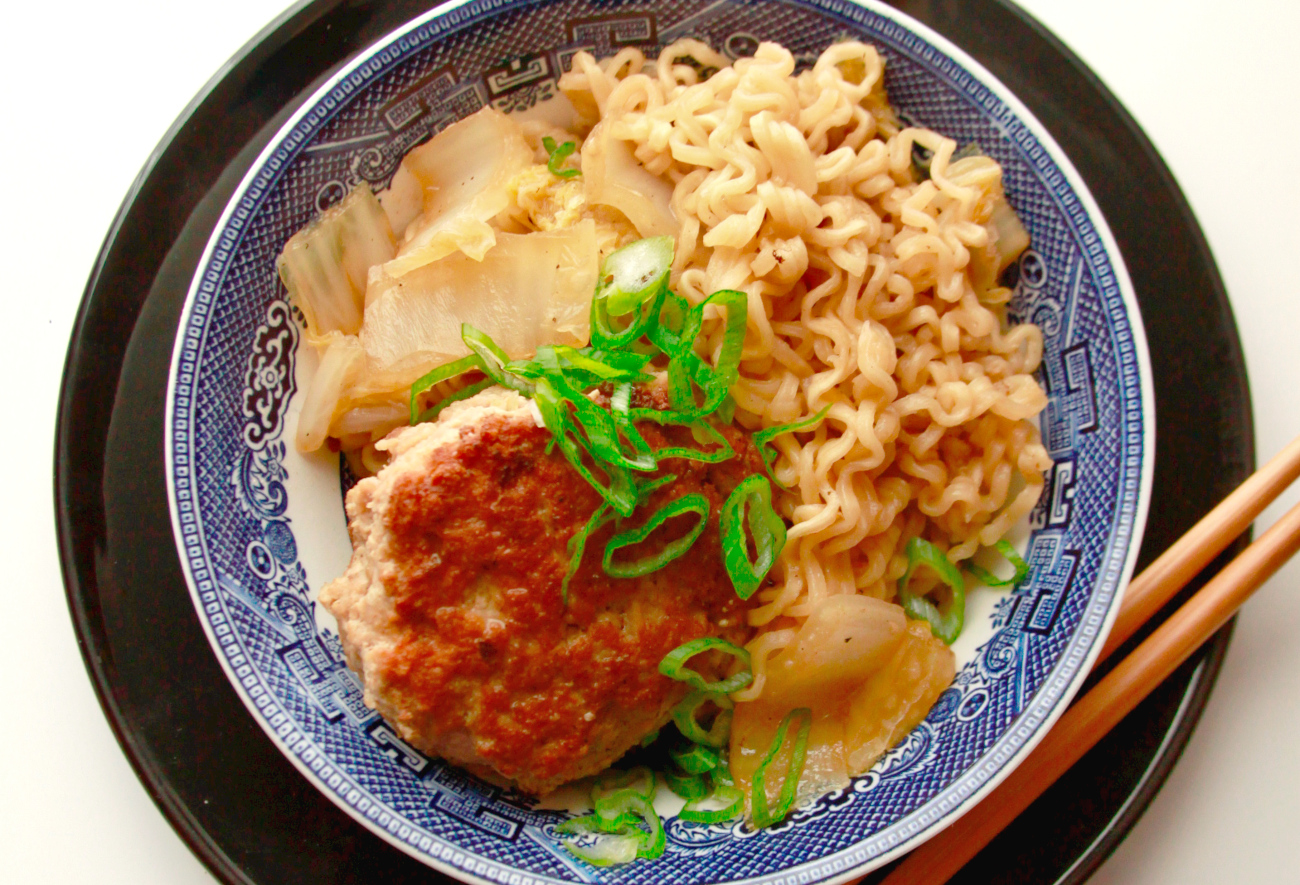
Names are more deceiving than you think. These Lion’s Head Meatballs have an intriguing identity but are full of ingredients you’re familiar with. Pork-based meatballs are seared and cooked in a quick deeply-savory broth. Once brought to a boil, add-ins like cabbage and noodles partner up with the meatballs, making this a complete one-dish meal that makes you rethink Chinese food.
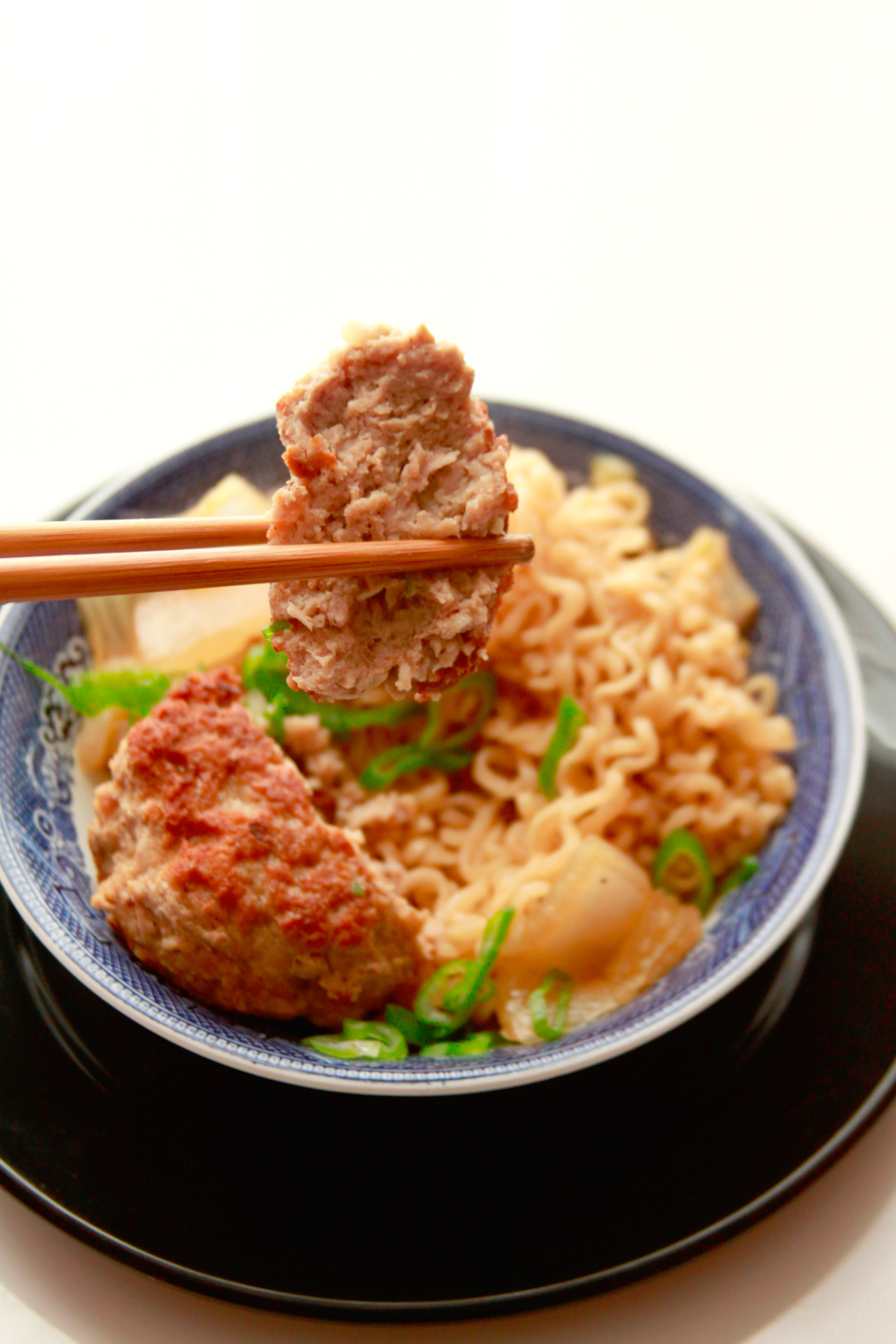
These meatballs are called Lion’s Head Meatballs, but not because there’s anything precarious in them. The name comes from the gigantic size of the meatballs themselves, resembling the shape of a guardian lion. After coming across this recipe in a vintage recipe box’s index card, I dug further and found that it’s not just a name from left-field to peak the reader’s attention. Originating back to 15th century Eastern China, Lion’s Head Meatballs come in two varieties — white and red. White is plain, while red is cooked with soy sauce.
This one-pot meal, which is more like the soy sauce-based red version, starts with prepping the meatballs. I choose to use pork, but you can also use beef, just make sure it’s a leaner ratio of beef like 10/90. A familiar cast of characters appears in the ingredient list — soy sauce, scallions, ginger, and cumin. There are, however, some ingredients that you may want an explanation as to why they’re present.
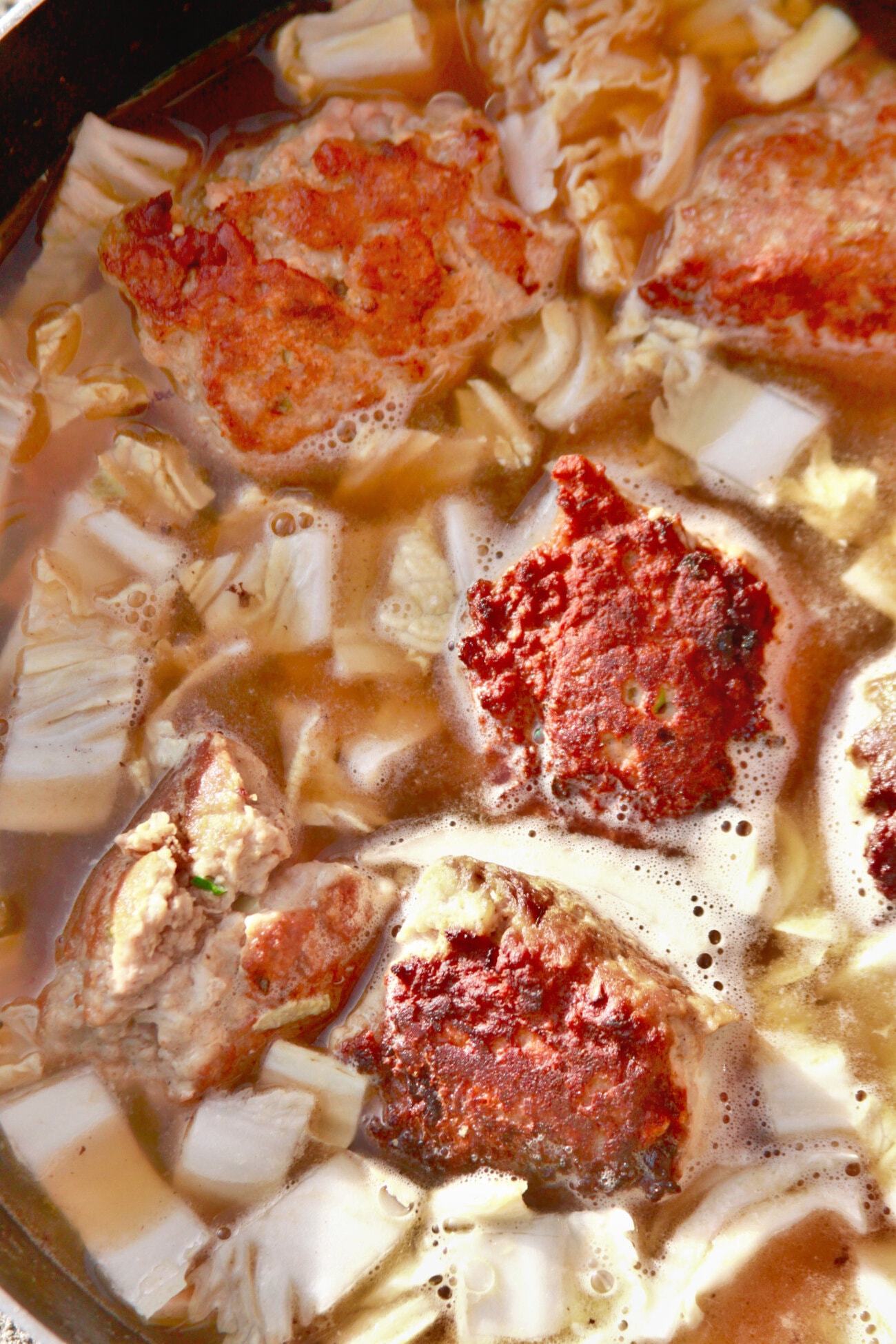
A touch of sugar is not as weird as it sounds — a lot of dishes benefit from being balanced with a bit of sweetness. Since I wanted the meatballs to keep their shape, I opted to use granulated sugar. It’s seriously only two teaspoons, but it makes all of the difference. I brought up the meatball shape, and this is where the eggs and cornstarch come into play. The protein from the eggs and the thickening power of the cornstarch keeps the meatballs, well, meatball-shaped. Without the right binder, the meatballs will fall apart in the broth.
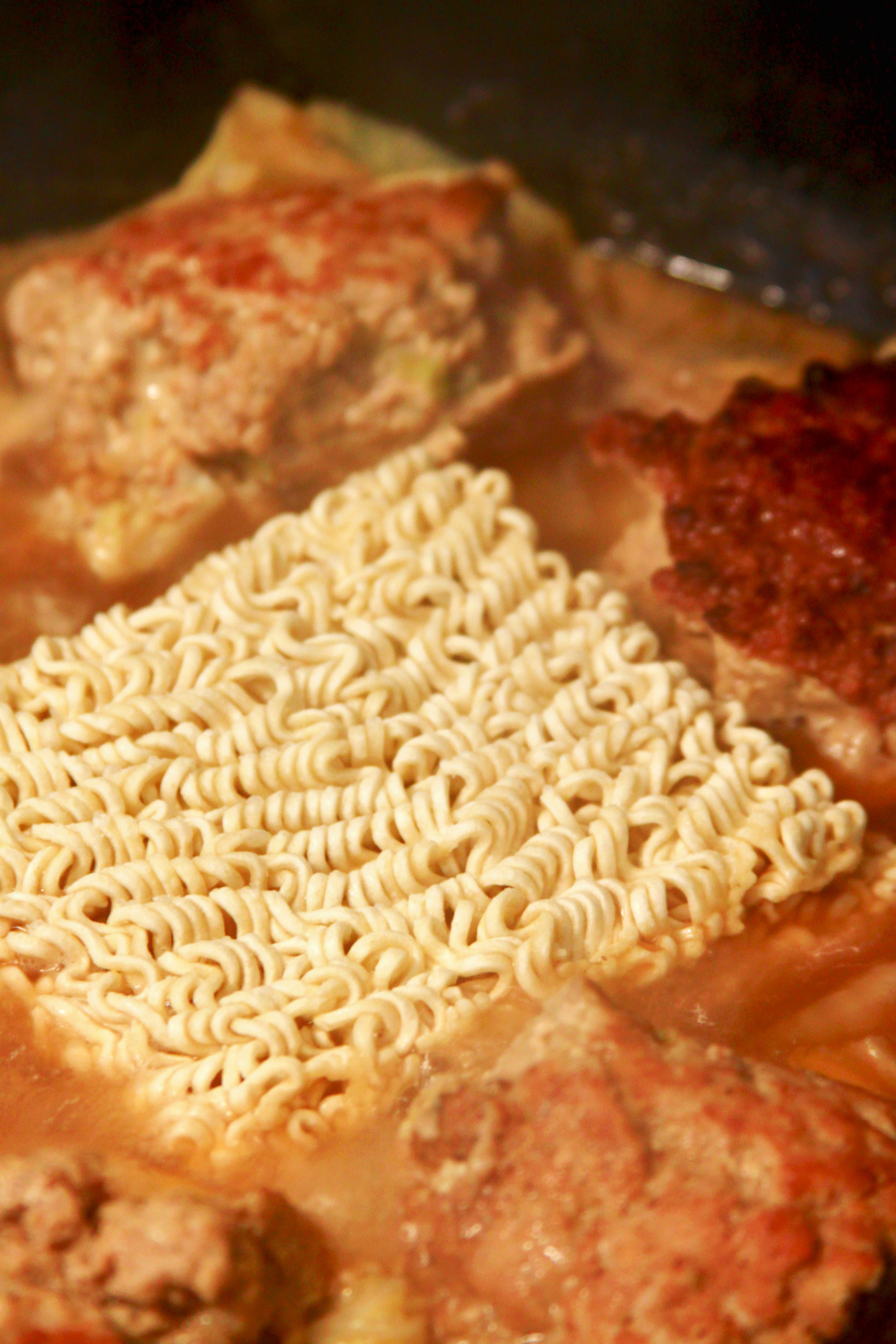
The secret ingredient to enhance the pork is super simple —- baking soda. Yes, baking soda, it’s not just used in sweet baked goods. Baking soda locks the moisture into the meat, preventing a gross soupy meat liquid from oozing out. Having this moisture stay in the meat means that the meatballs will have a softer, tender texture.
After ten or fifteen minutes of simmering in the broth, the meatballs come out of the skillet. Next, you go and drop in a packet of ramen noodles (without the packet of seasonings). I used these noodles as a convenience, as they cook through in a mere three-ish minutes.
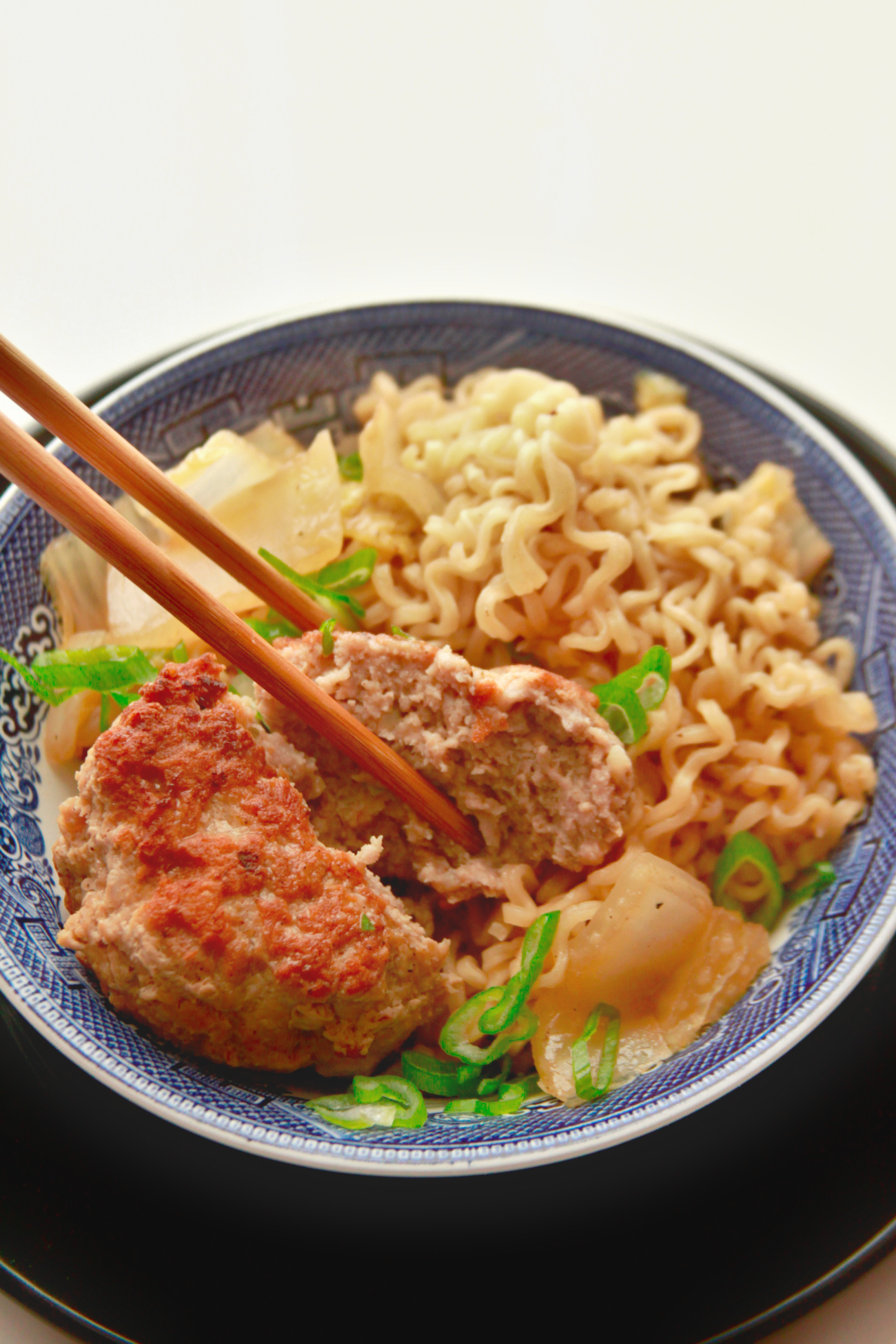
Portioned out into bowls a bite of meatball, cabbage, and noodle never tasted so good! The meatballs are so tender, I cut through them with a set of chopsticks, that’s how soft they were. The ingredients heighten the complex flavors of the pork. Simmering the meatballs in the chicken stock imparted the broth with a deep meaty flavor. Each bite tastes like you’ve been cooking and simmering the dish for hours. Dinner time can be satisfying without being soul-crushingly difficult. Seriously, why have we been living without these meatballs for so long?
Lion's Head Meatballs
Ingredients
- 2 lbs ground pork
- ⅓ cup soy sauce, divided
- 1 scallion finely sliced, divided
- 2 teaspoons ginger, finely diced and divided
- 2 teaspoons granulated sugar
- 4 tablespoons cornstarch
- 1 teaspoon ground cumin
- 3/4 teaspoon baking soda
- 2 large eggs, lightly beaten
- 4 tablespoons sesame oil
- 4 cups chicken stock
- 4 teaspoons mirin
- ½ napa cabbage, cut into chunks
- 2 packets of ramen noodles
- Kosher salt and freshly ground black pepper to taste
Preparation
- In a large mixing bowl, combine ground pork with 6 tablespoons of soy sauce, 1/2 sliced scallion, 1 teaspoon of diced ginger, sugar, cornstarch, cumin, baking soda, and eggs. Season with salt and pepper, and mix thoroughly to distribute ingredients.
- Divide mixture into 10 parts about ½ cup in size or 3 inches in diameter, rolling each portion into a ball, set aside on a large plate or a cutting board lined with plastic wrap.
- In a large skillet, heat sesame oil and sear meatballs (you might have to sear meatballs in batches depending on your skillet size) until browned on the outside.
- Once seared, add all of the meatballs back into the skillet. Add in the remaining 1 teaspoon of ginger and the remaining 6 tablespoons of soy sauce along with the chicken stock, mirin, and cabbage.
- Bring to a boil, reduce to a simmer, covering with a lid, cooking until meatballs are cooked through and cabbage is tender, about 15 to 20 minutes. Season with salt and pepper as needed.
- Remove meatballs and add in ramen noodles, mixing to combine with the broth, about 2 to 3 minutes. Once cooked, add meatballs back in. Garnish with reserved scallions and enjoy.