
Why You Shouldn’t Bake Bacon In The Oven

By now we’ve watched enough food shows to see chefs pulling out sheet pans of crispy bacon from ovens. The methodology makes sense, in the oven, you can cook large batches of bacon and all of the mess is localized to one sheet pan. But is baking bacon really as easy as the television shows depict?
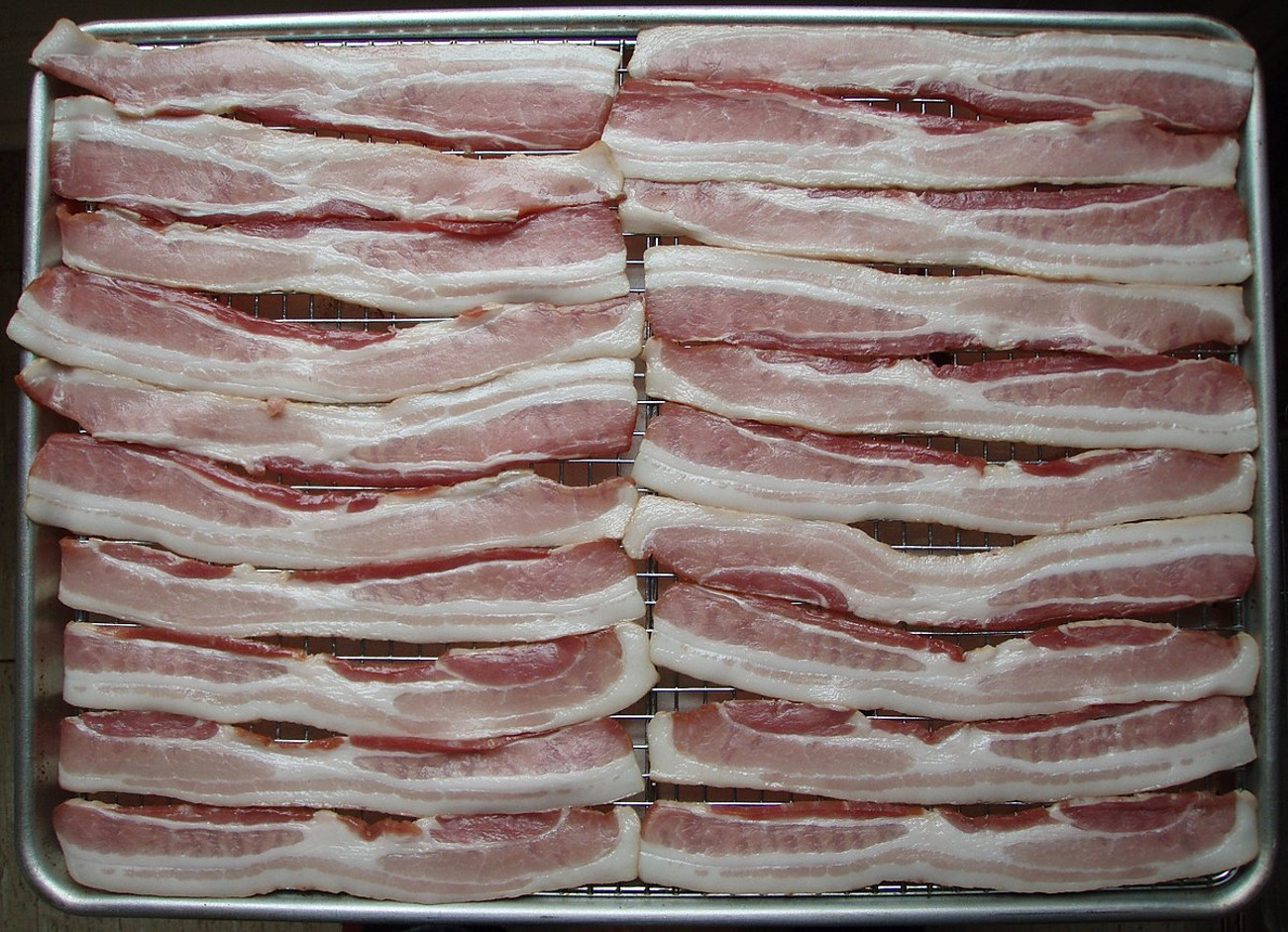
Line a sheet pan, fill with bacon, and in forty-ish minutes you have a pile of crispy golden goodness– or so the story goes. The internet is full of easy how-to videos to bake up bacon, but the articles do not factor in the risks involved with cooking bacon in the oven.
A home oven has the same temperature range as a restaurant oven, but they’re rarely maintained like those in a professional kitchen. For the home cook, there isn’t a crew to deep clean ovens every week, which means food and grease accumulate over time. Since bacon bakes at a temperature of 400 degrees and above, all of those bits of dirt will fill your oven with smoke.
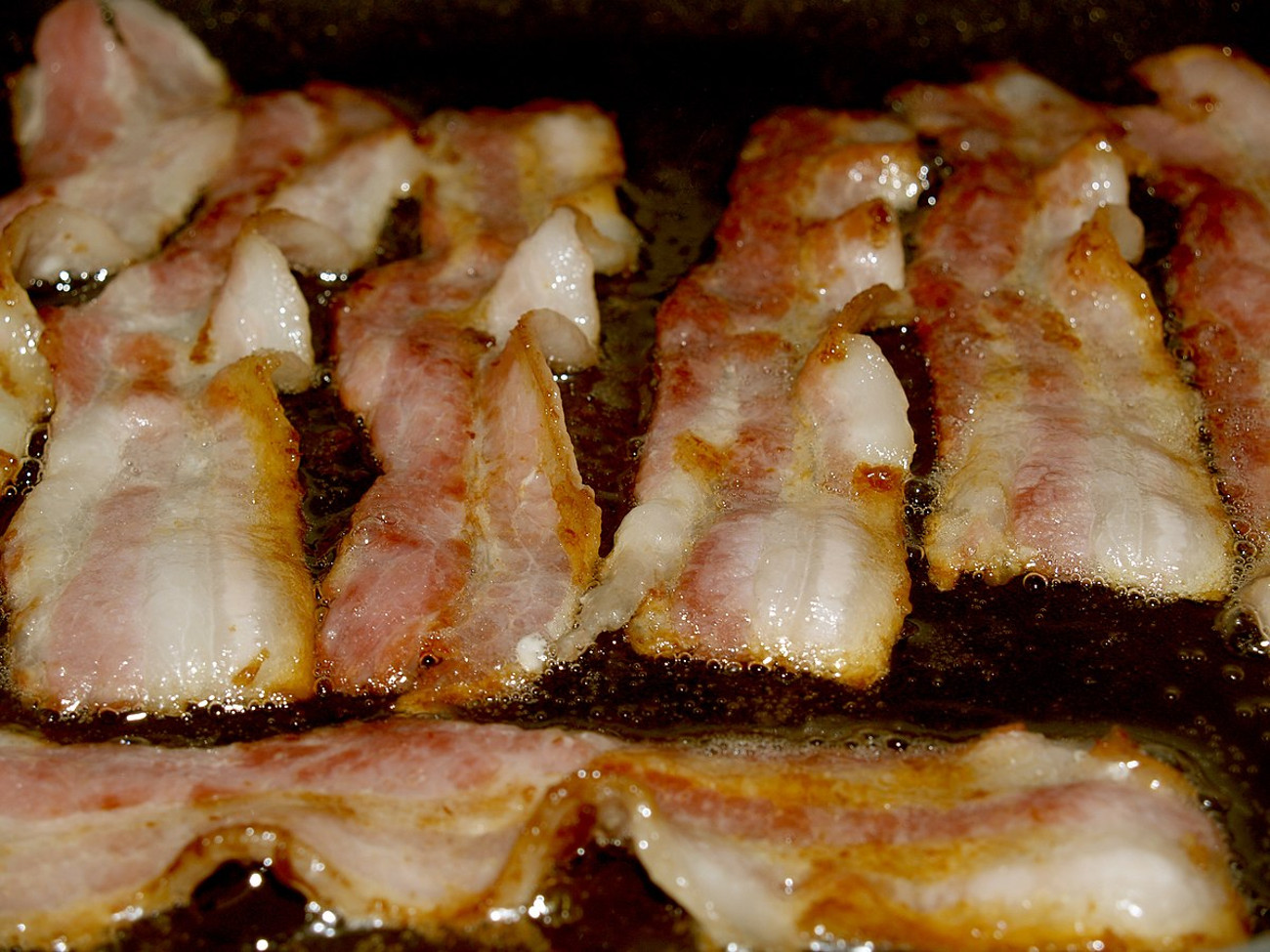
Many articles state there is minimal splatter, however, this is not the case. Most bacon in America is fifty percent fat. We generally see the grease pooled in the sheet pan but a lot of it scatters throughout the oven. At such high temperatures, it’s impossible for it to not go all over the place. Sometimes this splattering is barely detectable, it’s only when we inspect the oven that we see the disaster. The high temperatures burn the grease, curing it to the oven walls.
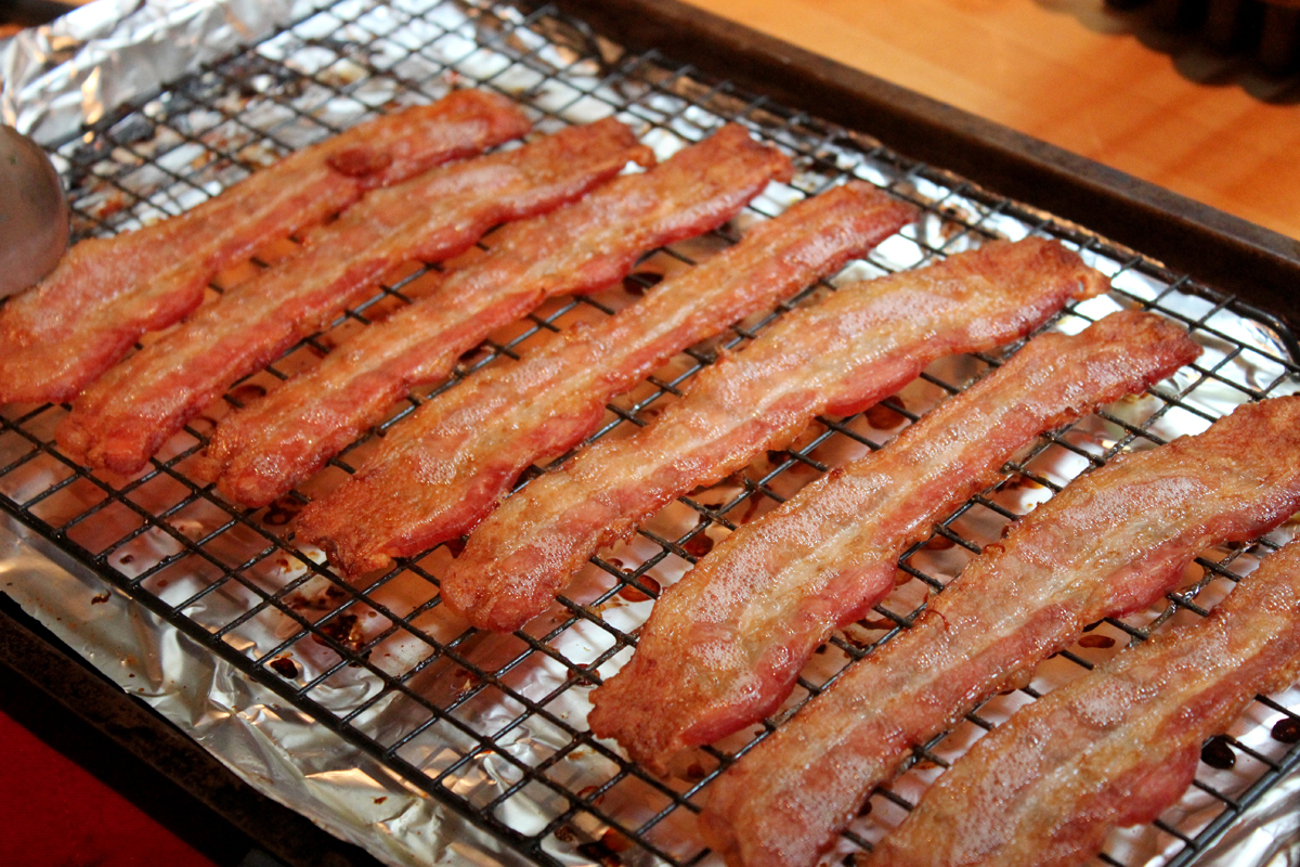
We think cleaning the stovetop is bad, just wait until you try to clean the inside of an oven. Though wiping a stovetop down is a hindrance, it takes even longer to clean an oven. This baking method comes with a dangerous risk of grease fires, so unless you have a clean oven to begin with, you’re taking a risk. So at the end of the day, the way your mother cooked bacon in the frying pan is the best way to go!